


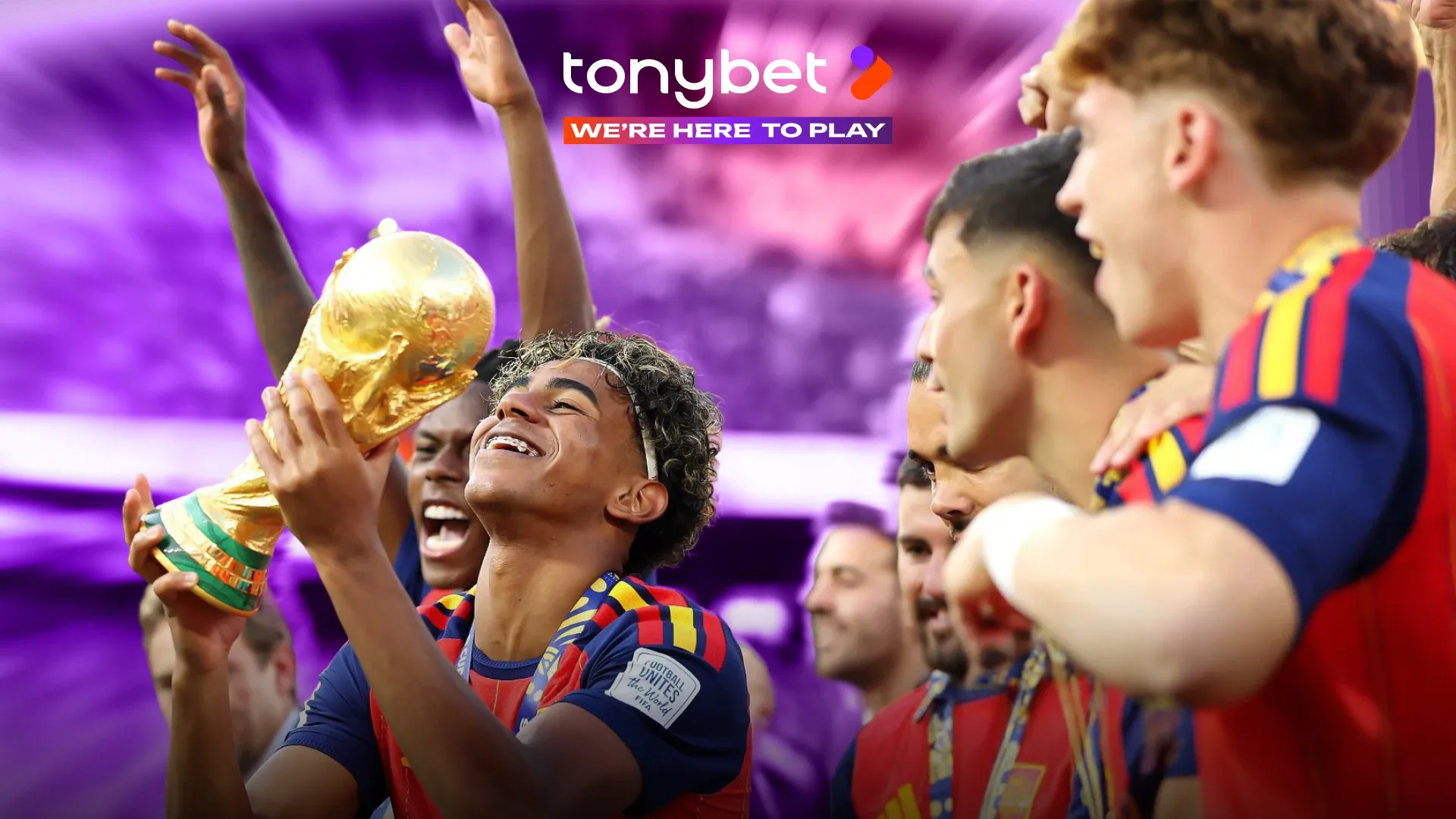


Spain needed 120 minutes, an impact substitute, and a resilient defensive performance down the stretch, but they accomplished the ultimate goal in the 2026 FIFA World Cup final in East Rutherford, New Jersey, to become world champions.
La Roja claimed the nation’s second World Cup title with a 1-0 victory against Argentina thanks to an extra-time goal from Ferrán Torres. The Barcelona forward came on as a substitute but latched on to a bouncing ball inside the box and fired an unstoppable shot past Emiliano Martínez to give Spain the victory.
In many ways, it echoed Andrés Iniesta’s goal in the 2010 FIFA World Cup final against the Netherlands, also coming in extra time and against a formidable opponent.
⭐️⭐️ ¡¡𝗦𝗢𝗠𝗢𝗦 𝗕𝗜𝗖𝗔𝗠𝗣𝗘𝗢𝗡𝗘𝗦 𝗗𝗘𝗟 𝗠𝗨𝗡𝗗𝗢!!#VamosEspaña | #CopaMundialFIFA pic.twitter.com/NFOrFpIUoy
— Selección Española Masculina de Fútbol (@SEFutbol) July 19, 2026
Let’s look back at Spain’s journey to the title because, despite what the statistics might suggest, Luis de la Fuente’s side did not have an easy road to lifting the trophy.
A Forgettable Debut and the Birth of a New Cult Hero
Spain were drawn into Group E alongside Cape Verde, Saudi Arabia, and Uruguay. They were massive favourites early on, but they stumbled unexpectedly in the opener against Cape Verde.
Despite registering 74% possession, 27 shots, and a 2.10 xG compared to Cape Verde’s 0.21, Spain didn’t find the back of the net and had to settle for a 0-0 draw. It was one of the most shocking results of the tournament, but it led to the birth of a legend in Vozinha.
The 40-year-old goalkeeper became one of the most popular players at the World Cup after his magnificent display against a Spanish team that lacked sharpness in the final third. That would change as the tournament progressed, however.
Bouncing Back in the Group Stage
Spain needed a positive result against Saudi Arabia in their second match to ease the pressure ahead of the group-stage finale against Uruguay.
It took less than 15 minutes for Lamine Yamal to break the Saudi resistance. Mikel Oyarzabal, who was highly criticized after a 30-minute spell in which he didn’t touch the ball against Cape Verde, scored twice in the space of three minutes in the first half.
An own goal from Hassan Al-Tambakti sealed the deal, and Ferrán Torres had a disallowed goal late in stoppage time. Still, the 4-0 win left Spain comfortably positioned to secure top spot in the group.
🧩 ¡𝗣𝘂𝘇𝗹𝗲 𝗰𝗼𝗺𝗽𝗹𝗲𝘁𝗮𝗱𝗼!
8 piezas para la historia.#VamosEspaña | #CopaMundialFIFA pic.twitter.com/jRRacHvPxH
— Selección Española Masculina de Fútbol (@SEFutbol) July 20, 2026
The match against La Celeste was a rugged, tight affair. Uruguay was coming off back-to-back uninspiring draws against Saudi Arabia and Cape Verde, and they posed little attacking threat.
They recorded just five shots, 33% possession, and a 0.20 xG as Spain cruised to a 1-0 victory thanks to a goal from Álex Baena. The Atletico Madrid winger took advantage of a mistake from Fernando Muslera to hand Spain all three points, keep their undefeated record alive, and move into the knockout stage with no goals allowed and in first place.
Hitting Their Stride Against Austria
Spain were paired with Austria, who finished second in Group J, but it was an easy game for La Roja. Although it was far from their toughest test at the tournament, they delivered one of their best performances in the title-winning campaign.
Two goals from Mikel Oyarzabal on either side of half-time and another from Pedro Porro allowed Spain to advance to the Round of 16. Their disciplined defending and clinical finishing reinforced the growing belief that they were genuine World Cup contenders.
Cristiano Ronaldo’s Last Dance
Portugal were Spain’s next opponent in the Round of 16, and in a way, this was one of their sternest tests of the tournament.
Although the team controlled possession for long stretches, Portugal proved to be a tough opponent defensively. The breakthrough finally arrived in the 91st minute, when Mikel Merino scored following a through ball from Torres.
Merino had emerged as a reliable super-sub at Arsenal, and that knack for scoring in big games was on full display at the World Cup as well.
Unai Simón’s Historic Run Ends
Belgium entered the quarterfinals brimming with confidence following a 4-1 victory over the United States in the Round of 32. This game saw Unai Simón concede a goal for the first — and only — time at this World Cup.
Simón set a record, going 650 minutes without conceding a goal at the World Cup, dating back to 2022. The record was broken by Charles De Ketelaere, who scored with a close-range header in the first half of this quarterfinal tie.
However, Merino stepped up again to save Spain from going into extra time — his 88th-minute winning goal pushed the team into the semifinals and set up a thrilling matchup against France.
A Dominant Display Against France
Spain knew they’d have to deliver their best performance of the tournament to beat France and reach the 2026 FIFA World Cup final, and that’s precisely what they did.
Aware that Didier Deschamps’ men were at their best in possession, Spain decided to steal the ball and limit the influence of players such as Kylian Mbappe, Michael Olise, and Ousmane Dembele.
Goals from Oyarzabal and Porro secured a deserved 2-0 victory, sending Spain into the final against Argentina, who had defeated England in the other semifinal.
Ferrán Torres Delivers World Cup Glory
Spain used the same formula that allowed them to defeat France in the final against Argentina, stealing the ball from the opposing midfielders and moving it around until they found space.
NO PODÍA SER OTRO.@FerranTorres20 es el 𝗠𝗘𝗝𝗢𝗥 𝗝𝗨𝗚𝗔𝗗𝗢𝗥 𝗗𝗘 𝗟𝗔 𝗙𝗜𝗡𝗔𝗟 𝗗𝗘𝗟 𝗠𝗨𝗡𝗗𝗜𝗔𝗟.
🏆🦈 ¡¡DALE, TIBURÓN!! ¡¡ENHORABUENAAAA!!#VamosEspaña | #CopaMundialFIFA pic.twitter.com/pFfbalHVJt
— Selección Española Masculina de Fútbol (@SEFutbol) July 19, 2026
It took time, but in the early seconds of the second extra-time period, Torres took advantage of a loose ball to score the winner. Argentina didn’t have a response in the dying moments of the match, allowing Spain to lift the World Cup trophy for the second time in the country’s history.
With the best defensive line, the Golden Ball winner, and excellent performances across the field, Spain deservedly won the 2026 FIFA World Cup. Not only were they the better team overall, but they stepped up their play consistently throughout the tournament. They capped off their triumph with victories over France and Argentina, arguably the tournament’s two strongest sides on paper.


