




Three of the most familiar result markets in soccer betting are 1X2, Double Chance, and Draw No Bet. All three ask which team comes out ahead, but each prices the risk and treats the draw differently. Learn how they settle, and you can match the market to the fixture instead of betting the same way every week.
Why These Markets Are Popular Among Soccer Bettors
Soccer has three possible results, not two. A game ends in a home win, an away win, or a draw, and that third outcome is what makes these markets tick. Across the last 10 Premier League seasons, roughly one match in four has finished level, about 23%, and that base rate decides how often a bet wins and what it pays.
The three markets give you a sliding scale of risk. The 1X2 backs one result for full odds, Draw No Bet removes the draw from the equation, and Double Chance covers two results at once.
How Match Outcomes Affect Different Bet Types
The result settles your bet, so think about outcomes before you think about odds. Picture Everton and Aston Villa finishing 1-1. That single scoreline beats a 1X2 bet on either side, refunds a Draw No Bet, and wins a 1X or X2 Double Chance. One result, three different fates, decided entirely by the market you picked.
What Is the 1X2 Market?
The 1X2 market lets you choose between the three possible full-time results: a home win, a draw, or an away win. You pick one of three results and take the listed odds. Understanding what 1X2 means in betting is one of the first steps towards reading a soccer coupon properly.
Meaning of Home Win, Draw, and Away Win
The name spells out the three selections:
- 1 means a home win.
- X means a draw.
- 2 means an away win.
Back the 1 and you need the home side to win. Select X and the match must finish level. Choose 2, and the away team must win. Only one of the three selections can land, so a 1X2 bet is a single prediction of the full-time result.
How 1X2 Odds Work
Every price carries an implied probability: shorter odds point to a likelier result, longer odds to a less likely one. A 2.00 home price implies a 50% chance; a 5.00 away price implies 20%. Add the three implied probabilities across a market, and you get a figure above 100%: the overround, which is the margin the bookmaker builds in.
Reading those numbers is the core of any 1X2 soccer betting tips. Any 1X2 tip only holds value when your own estimate of a result beats the probability baked into the price.
Advantages and Risks of 1X2 Betting
The appeal is the payout. Backing a single result, the odds run longer than on the safer markets, so a correct call returns more. The risk is the flip side: one winning outcome out of three, with the draw a constant threat to home and away picks alike.
The best tips 1×2 come down to finding one result that is genuinely underpriced, not backing short favourites for the sake of it.
Example of a 1X2 Soccer Bet
Say Arsenal host Fulham, priced at 1.55 for the home win, 4.20 for the draw, 6.50 for a Fulham win. Stake CA$10 on Arsenal and a home victory returns CA$15.50, a CA$5.50 profit. A draw or a Fulham win loses the lot. That is the 1X2 trade in one line: a bigger return riding on a single, unprotected result.
What Is Double Chance Betting?
Double chance betting is the cautious end of the same idea. Instead of one result, you back two, so your slip survives more scenarios. Newcomers often ask what a double chance in betting is, and the answer is that you cover two of the three possible results at once.
How Double Chance Covers Two Outcomes
A double chance bet wins if either covered result happens, and loses only on the one you left out. With two of three outcomes working for you, it lands far more often than a single pick, so bookmakers price that higher strike rate with much shorter odds. You win more often and collect less. That is the trade-off of double chance betting in soccer.
Types of Double Chance Bets (1X, X2, 12)
There are three Double Chance betting options:
- 1X covers a home win or a draw.
- X2 covers an away win or a draw.
- 12 covers either team to win, so only a draw loses.
Knowing double chance in betting at this level means picking the pair that matches the result you expect to avoid.
When to Use Double Chance Markets
The market earns its keep in tight games: a League Cup tie, a Merseyside derby, a relegation six-pointer between two sides fighting the drop, where avoiding defeat is the realistic call.
The classic double chance home or away decision comes down to how much you trust the visiting side — cover the draw and the away win with X2 when you expect a close game but give the edge to the underdog.
Any double chance strategy leans on fixtures where a draw is a live possibility, because that is exactly where covering two outcomes pays. It also steadies an accumulator leg that would otherwise hinge on one fragile result. A sharp double chance soccer prediction starts from the single outcome you are most confident will not happen.
Example of a Double Chance Bet
Take Brighton away at Manchester City, an underdog you expect to sit deep and frustrate. The X2 covers the draw and the away win, so only a home result beats you.
With double chance bets explained this way the appeal is obvious, though the X2 odds run far shorter than backing the away win alone.
So, is the double chance to win feature worth it? The answer is it all comes down to whether those shorter odds still beat your read of the game.
What Is Draw No Bet?
Draw No Bet sits between 1X2 and Double Chance. You back one team to win, but the draw is removed as a losing result.
How Draw No Bet Works
You back one team, but the three match outcomes settle in three different ways: a win pays, a draw refunds the stake, and a defeat loses. Understanding how a draw no bet works means seeing that the draw is lifted out, leaving a two-way market where a level game is neither win nor loss.
What Happens If the Match Ends in a Draw
When the game finishes level, the bet is a push and your stake comes back in full: no profit, but no loss. The refund applies to regular time only, the 90 minutes plus stoppage. Extra time and penalties in a cup tie do not count unless the market states otherwise.
Benefits and Drawbacks of Draw No Bet
The benefit is protection with more upside than Double Chance, since a winning team pays better than the equivalent 1X or X2. The drawback is that a draw leaves money on the table, as you collect nothing beyond the returned stake.
Sound draw no bet tips favour close matches where you fancy one side but rate the draw a danger. For accumulator players, draw no bet predictions steady a coupon, though the acca maths carries a catch.
Example of a Draw No Bet Wager
Back a favourite on Draw No Bet at 1.55 with a CA$10 stake. A win returns CA$15.50, a draw hands your CA$10 back, a defeat loses it. The twist matters in a draw no bet acca: if one leg of a draw no bet on accumulator draws, that selection is voided and the odds recalculate without it rather than killing the coupon.
Comparing 1X2, Double Chance, and Draw No Bet
Line the three up and the trade-off is clear. Each buys safety at the cost of price, and the right choice depends on how you read the fixture and the variance you can stomach.
Key Differences Between the Markets
The draw is the pivot separating the three markets, and how each treats a level result drives how they price and pay.
| Market | Winning outcomes | What a draw does | Odds |
| 1X2 | One of three | Loses the bet, unless you backed the draw | Longest |
| Draw No Bet | One team, draw removed | Refunds your stake | Middle |
| Double Chance | Two of three | Can win the bet, if your pair included it | Shortest |
Risk vs Reward Comparison
Risk falls as you move from 1X2 to Draw No Bet to Double Chance, and so does the return. Your liability is just the stake you put down, but how often you lose it changes sharply across the three. On a heavy favourite, the safer markets shorten to prices barely worth the stake and the value drains away. On an even fixture, that protection is worth paying for, because the draw is a real threat rather than a long shot.
Typical Odds and Potential Returns
Price one favourite across all three markets. The protection you add shows up in the odds, and the payout shrinks with the risk. Here is how a CA$10 stake plays out:
| Market | Selection | Odds | Return on CA$10 |
| 1X2 | Favourite to win | 1.90 | CA$19.00 |
| Draw No Bet | Favourite, draw removed | 1.45 | CA$14.50 |
| Double Chance | Favourite win or draw | 1.20 | CA$12.00 |
Which Market Fits Different Betting Styles
Each market suits a different temperament at the betting slip:
- The aggressive value hunter leans on the 1X2, taking the draw risk for the longer price.
- The cautious bankroll protector leans on Double Chance, accepting short odds for a wide safety net.
- The confident but cautious bettor leans on Draw No Bet, backing a team they fancy while insuring against a stalemate.
There is no single best market, only the one that fits the match and your appetite for risk.
How to Choose the Right Soccer Market
Pick the market after reading the fixture, not before. The same teams and prices can point to different markets depending on form, stakes, and how the game is expected to play out.
Assessing Team Strength and Form
Start with the sides. A dominant team in good form against weak opposition, think Manchester City hosting a newly promoted club, may be worth backing straight on the 1X2, where the price rewards confidence.
Two evenly matched teams, or a favourite carrying injuries and a run of poor results, tilt the case toward the protected markets. Recent results, missing players, and a team’s current trend all feed that read. Treat each as a signal, not a certainty.
Considering Match Competitiveness
How tight is the game likely to be? A one-sided fixture rarely needs protection, so Double Chance or Draw No Bet costs price for little gain. A derby or cup tie where form goes out the window is the opposite, where covering the draw earns its keep. The more competitive the game, the more the safer markets justify their shorter odds.
Balancing Probability and Value
Value is the whole game. A market only holds value when its odds imply a probability lower than your honest estimate. A short Double Chance price on a strong favourite often hides poor value, since you pay heavily for safety you may not need. Weigh each market’s implied probability against your own model of the match, and take the one where the edge sits in your favour.
Common Mistakes When Betting These Markets
The markets are simple, but the errors are common, and most come down to misreading the price or the rules rather than the soccer.
Ignoring Implied Probability
The most frequent mistake is backing a market without checking what its odds imply. A 1.10 Double Chance price rates the outcome better than 90 percent likely, leaving little room for profit and none for error. Convert the odds to a probability and ask whether the real chance beats the price.
Overvaluing Favourites
Short favourites feel safe, which is exactly why they are often poor value. Stacking one onto a protected market like Double Chance shortens the odds further, until the return barely covers the risk and the payout no longer justifies the stake.
Misunderstanding Market Rules
The rules catch people out, especially on Draw No Bet. Assuming a draw pays a profit, when it only refunds the stake, leads to disappointment. So does forgetting that Draw No Bet and Double Chance settle on regular time alone, or that a drawn Draw No Bet acca leg is voided and the odds recalculate. Read how each market settles before you stake.
Responsible Gambling
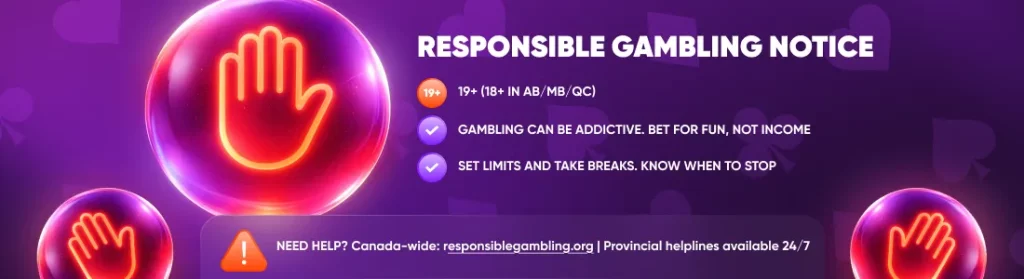
Betting should be entertainment, not a way to make money. Gambling can be addictive—only bet what you can afford to lose, and never chase your losses. Set deposit, loss, and time limits before you play, and take regular breaks.
If gambling stops being fun or starts affecting your finances, relationships, or wellbeing, seek help immediately.
Support available across Canada:
- Responsible Gambling Council: responsiblegambling.org (national resource centre)
- British Columbia: Call 1-888-795-6111 (24/7)
- Alberta: Call 1-866-332-2322 (24/7)
- Quebec: Call 1-800-461-0140 (24/7, bilingual)
- Saskatchewan: Call 1-800-306-6789 (24/7)
- Manitoba: Call 1-800-463-1554 (24/7)
- Atlantic provinces: Call 1-800-461-1234 (NB), 1-888-429-8167 (NS), 1-855-255-4255 (PE), 1-888-899-4357 (NL)
- Additional support: Gambling Therapy (gamblingtherapy.org), Gamblers Anonymous (gamblersanonymous.org)
- 988 Suicide Crisis Helpline: Call or text 988
TonyBet provides responsible gambling tools in your account settings, including deposit limits, loss limits, time limits, cool-off periods, and self-exclusion. Use them.
Age restrictions: You must be 19 or older to gamble in British Columbia, Saskatchewan, and Atlantic provinces. You must be 18 or older in Alberta, Manitoba, and Quebec. Underage gambling is illegal.
For more information about responsible gambling practices and support resources, visit the Responsible Gambling section on TonyBet.
FAQ
What does 1X2 mean in soccer betting?
Is Double Chance safer than a 1X2 bet?
What happens to a Draw No Bet wager if the match ends level?
Which market offers the best value for beginners?


