


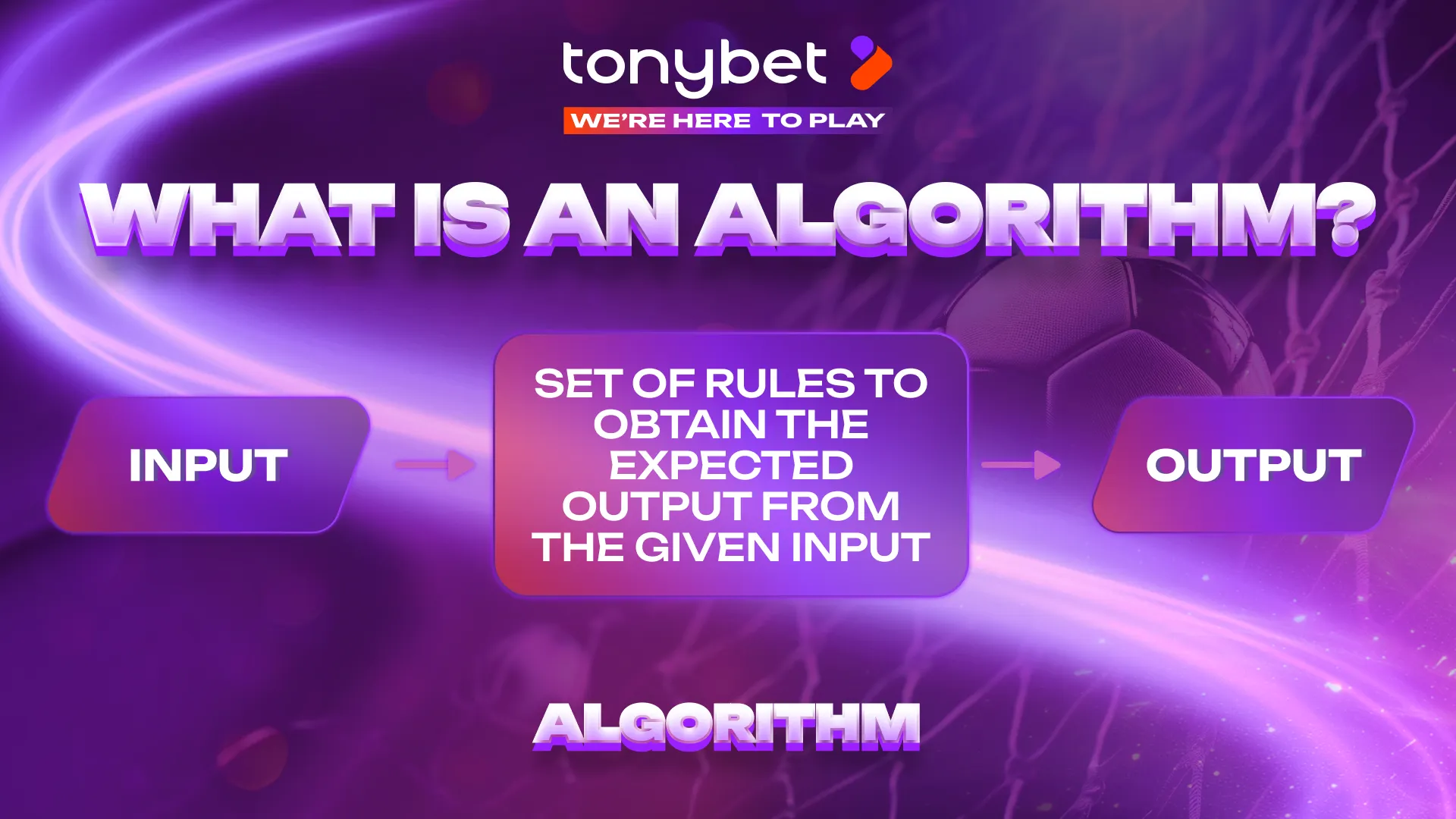



We tend to remember individual moments in soccer — a missed penalty, a red card, or a late goal — and forget everything that led up to them. Algorithms do the opposite.
In this review, we look at how prediction models focus on repeated patterns instead of single moments and how AI uses those patterns to estimate outcomes more consistently.
Why Use Algorithms for Soccer Match Predictions
The main advantage of algorithms is their unbiased processing capacity. Humans struggle to track hundreds of comparable matches across seasons and leagues. This is where data-driven prediction becomes useful. Instead of focusing on what feels important, models focus on what has actually influenced outcomes in the past, even when those factors seem unremarkable on the surface.
Benefits Over Intuition and Manual Analysis
Manual analysis often gives too much weight to the most recent match or a single narrative, such as “good momentum” or “must-win pressure.” Algorithms ignore those stories unless the data shows they matter.
Because the same rules are applied every time, results are easier to compare, review, and correct. This consistency is why AI betting predictions are often used as a reference tool — to check whether a strong opinion is supported by evidence or driven by assumption.
The Role of Data in Modern Soccer Analytics
Data becomes useful only when it captures behaviour, not outcomes alone. Final scores tell part of the story, but they hide how matches unfolded.
Machine learning soccer models rely on repeated actions: how often teams create chances, how they perform away from home, how they respond after conceding, and how results change across different opponents. Over time, these actions form stable patterns that matter more than isolated results. This is the foundation of modern analytics in soccer.
Key Types of Algorithms Used in Soccer Prediction
Different algorithms answer different questions. Understanding their role helps avoid using the wrong tool for the wrong task.
Regression Models (Linear, Logistic)
Regression models estimate how much influence each factor has on an outcome.
- Linear regression is used when predicting numerical values, such as total goals or expected margins.
- Logistic regression is applied when outcomes fall into categories like win, draw, or loss.
Decision Trees and Random Forests
Decision trees mirror how people naturally think about matches — by asking a sequence of questions. Is the team playing at home? Is recent performance above average? Are key players missing?
A random forest combines many of these trees to reduce the impact of weak assumptions. Instead of trusting one line of reasoning, it averages many perspectives. This improves reliability and makes the model less sensitive to unusual matches.
Support Vector Machines (SVM)
Support Vector Machines are designed to draw clear boundaries between outcomes. Rather than predicting exact results, they focus on separating matches into groups with similar characteristics.
In soccer analytics, SVMs are useful when distinctions are subtle. They help classify matches where simple thresholds fail, especially in leagues where team quality overlaps heavily.
Neural Networks and Deep Learning
Artificial neural networks are used when relationships between variables are too tangled for simple rules. They can process large datasets and identify interactions that are difficult to isolate manually.
The downside is opacity. These models often provide strong outputs without clear explanations. That makes careful validation essential, especially when predictions are used for decision-making rather than exploration.
Bayesian Models
Bayesian models treat team strength as something that shifts gradually. They update expectations as new information arrives, instead of rewriting conclusions entirely.
This approach fits soccer well. Teams evolve through injuries, transfers, and tactical changes. Bayesian models handle this through probability and calibration, allowing forecasts to adjust without overreacting to short-term results.
Popular and Effective Algorithms in Research
In research-focused soccer prediction algorithms, the goal is reliability under real conditions. Leagues differ, data is incomplete, and team strength changes during a season. These methods cope with such realities better than simpler models and tend to hold up during evaluation.
Gradient Boosting Methods
Gradient boosting models work by correcting their own errors iteratively. Each new model focuses on the situations where previous predictions were weakest. This is especially useful in soccer, where outcomes depend on combinations of factors rather than single indicators.
In machine learning soccer research, gradient boosting is often applied to win/draw/loss prediction and probability estimation. It performs well because it can combine many different inputs at once: recent form, opponent strength, venue, and scoring indicators. Unlike basic regression, it captures interactions — such as when home advantage matters more against certain opponents than others.
Recurrent Neural Networks (RNNs) and LSTM for Sequence Data
Most traditional models treat matches as independent events. RNNs and LSTM models don’t. They treat matches as part of a timeline.
This matters because soccer performance unfolds in sequences. Fatigue builds across fixtures, tactical changes take time to show effects, and confidence shifts gradually. Recurrent neural networks are designed to learn these dynamics instead of flattening everything into averages.
In research, LSTM models are commonly used to track short-term trends — such as whether a team’s attacking output is improving or declining across recent matches. They’re most effective when used for forecasting patterns over several games rather than predicting a single isolated result.
Bayesian Hierarchical Models for Team Strength
Bayesian hierarchical models are widely used in academic soccer analytics because they treat uncertainty explicitly. Instead of assuming team strength is fixed, they allow it to evolve slowly as new matches are played.
These models also recognize structure. Teams belong to leagues, seasons, and competitive tiers. A newly promoted team, for example, is not treated the same as a long-established contender, even before enough matches are played. This improves calibration and prevents extreme reactions to short runs of results.
In modern analytics, Bayesian approaches are valued because they balance flexibility with restraint, producing forecasts that remain consistent across time.
Hypothetical Scenarios & Application Examples
The examples below illustrate how different soccer models can be applied to realistic match scenarios and common analytical questions.
Manchester City vs Arsenal (Premier League)
In recent seasons, matches between Manchester City and Arsenal have often been framed as form-based or momentum-driven. A gradient boosting model approaches this differently.
Instead of narrative, the model weighs:
- Home advantage
- Long-term scoring and defensive efficiency
- Head-to-head performance under similar conditions
In similar scenarios, a gradient boosting model would typically assign a higher win probability to Manchester City at home, even when Arsenal enter with strong recent form, due to stable historical patterns. This is a typical example of data-driven prediction overriding short-term perception.
Brighton vs Newcastle (Premier League)
Brighton have had periods where results dipped despite strong underlying play. In such cases, an LSTM-based model analyzing match sequences looks beyond results.
By tracking chance creation, defensive pressure, and match tempo across consecutive games, the model can identify whether performance is deteriorating or simply suffering from variance. In similar stretches, a sequence-based model would often indicate underlying conditions consistent with potential improvement before results begin to reflect it.
This illustrates why recurrent neural networks are useful when timing matters more than raw outcomes.
AC Milan Across a Serie A Season
Bayesian hierarchical models are commonly used to track team strength over long periods. Take AC Milan across a full Serie A season that includes injuries, squad rotation, and tactical adjustments.
Rather than treating each win or loss as a reset, the model updates Milan’s strength gradually based on opponent quality and match context. This avoids exaggerating short winning streaks or temporary slumps and produces more stable forecasting across the season. This approach is valued for its calibration, especially when comparing teams with uneven schedules or mid-season changes.
How to Choose the Right Algorithm for You
Picking from soccer prediction algorithms isn’t about chasing the most advanced model. It’s about choosing something that fits your goal, your data, and your limits. Most prediction problems fail because the tool doesn’t match the task.
Match Your Goal
Start by deciding what you actually want to predict. If you’re looking for win, draw, or loss, you’re dealing with classification. Models like logistic regression, decision trees, random forests, or gradient boosting models work well here.
If your focus is total goals or team goals, regression-based soccer models make more sense. They estimate numbers, not categories. For goal margins or strength differences, you’ll need models that handle continuous values and adjust for opponent quality. Trying to solve all of these with one model usually leads to weak results.
Data Availability & Quality
Your model can only work with what you give it. If your dataset is small or inconsistent, simpler models often perform better and stay more stable. Regression and tree-based models are easier to control in these cases.
When you have larger, cleaner datasets with multiple seasons and team metrics, ensemble methods like random forests or gradient boosting become useful. In soccer analytics, reliable data almost always matters more than model complexity.
Computing Resources & Technical Skill
Be realistic about what you can run and maintain. If you’re working with basic tools or limited computing power, stick to models that train quickly and are easy to interpret. Regression and decision trees fit that profile.
More advanced approaches, such as artificial neural networks, require stronger hardware and careful validation. Without that, they often look impressive but don’t hold up in practice.
Building a Simple Prediction Model: Step by Step
Most AI betting predictions start simple. A clear, repeatable setup is more valuable than a complex system that’s hard to understand.
Data Collection
Begin with match-level data: results, dates, teams, and venues. Add team metrics like goals scored, goals conceded, and recent form.
Player statistics can help later, but many solid beginner models rely mainly on team-level behaviour, especially when player data is incomplete or inconsistent.
Feature Engineering
Raw data needs shaping before it becomes useful.
Common features include:
- Recent form over the last few matches
- Home vs away performance
- Average goals for and against
- Shot volume or advanced metrics like expected goals (xG)
This step often has a bigger impact on results than switching between algorithms.
Training & Validation
Always separate past matches from future ones. Train your model on earlier data and test it on games it hasn’t seen.
Using time-based splits helps avoid misleading results. Cross-validation across different periods checks whether the model works consistently, not just in one stretch of fixtures.
Model Evaluation
Accuracy alone doesn’t tell the full story. Look at:
- Log Loss (or Ranked Probability Score) to measure how accurately predicted probabilities align with match outcomes
- Calibration to check whether predicted probabilities match what actually happens
Good analysis focuses on steady performance across different match situations, not just headline accuracy numbers.
Limitations and Challenges of Predictive Algorithms
Predictive models are only as strong as the assumptions they make and the data they see. Most failures don’t come from “bad algorithms,” but from mismatches between model design and real soccer conditions.
Overfitting & Generalization
Overfitting shows up when a model captures quirks that don’t repeat — like a short scoring streak, a temporary tactical setup, or a one-off injury crisis. These patterns inflate back-test results and collapse in live use.
To generalize, soccer prediction algorithms need time-aware testing (training on earlier seasons, testing on later ones) and restraint in feature count. If performance drops sharply when you change leagues or seasons, the model learned coincidence, not structure.
Data Bias and Missing Variables
Bias enters quietly. Some leagues log detailed shot data; others don’t. Some teams rotate heavily; others are stable. If your dataset overrepresents certain competitions or styles, the model will favour them.
Missing variables are just as damaging. Late lineup changes, role switches, or tactical adjustments rarely appear in datasets, yet they shift outcomes. Data-driven prediction works best when you know what isn’t captured and avoid overconfident conclusions.
Dynamic Factors
Team strength isn’t static. Transfers can change chance creation overnight; injuries can hollow out a defence for weeks. Most soccer models only adjust after matches are played, so they lag sudden changes.
This lag matters around transfer windows, congested schedules, and managerial changes. During these periods, probability ranges widen, and point estimates become less reliable. Treat outputs as conditional scenarios, not commitments.
Interpretability vs Performance
Transparent models (regression, trees) make it easier to spot mistakes — like overweighting home advantage or underestimating opponent quality. Opaque models (deep networks) may score higher on benchmarks but hide failure modes.
In modern analytics, performance gains should justify the loss of explainability. If you can’t diagnose why a model missed, improving it becomes guesswork.
Responsible Gambling
Predictive algorithms estimate probabilities, not certainties, and even well-calibrated models can be wrong due to unpredictable factors in sports. If you choose to bet, do so responsibly, only with money you can afford to lose, and treat predictions as one input rather than a decision-maker.
If gambling stops being enjoyable or feels difficult to control, Canadians can find confidential support and resources at responsiblegambling.org.
FAQ
Can beginner bettors use these algorithms?
Do I need coding skills to build a prediction model?
How often should I retrain my predictive model?


