


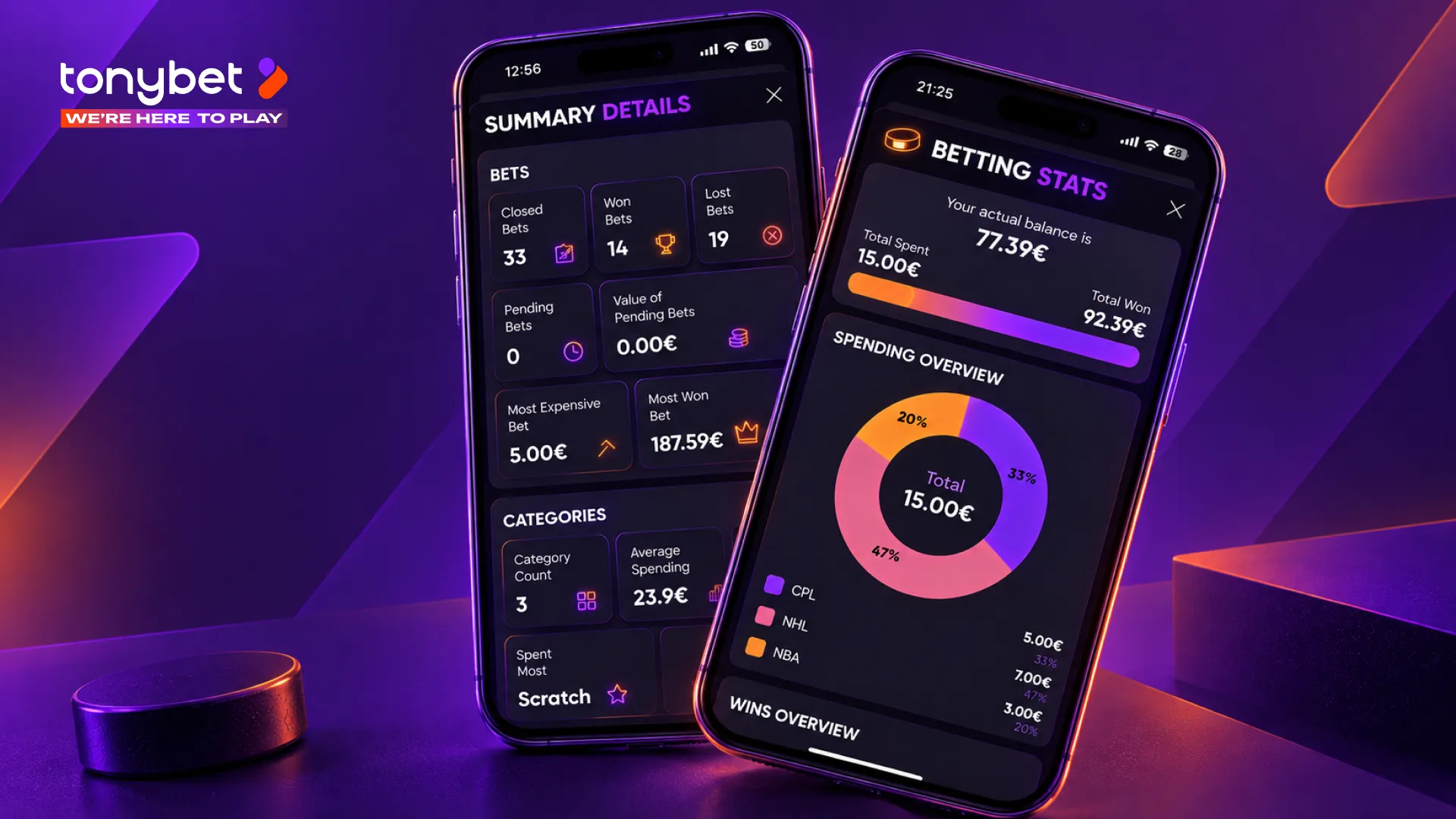



Many bettors remember their wins more clearly than their losses. That can make a betting record feel better than it really is. A sports betting tracker fixes that problem by keeping every bet, stake, odds, result, and profit or loss in one place.
A good betting tracker does not need to be complicated. It can be a spreadsheet, an Excel file, a Google Sheets page, or a simple app. This guide focuses on the metrics that actually help: ROI, stake size, closing line value, bankroll movement, and results by sport or market. The goal is to build a clean dataset that shows what is working, what is losing money, and which habits need to change.
Why Every Bettor Should Track Their Bets
A bettor who does not track results is mostly relying on memory, and memory can be biased. A tracker shows the full record, including small losses, pushed bets, bad prices, and markets that looked good but performed poorly over time.
Tracking also builds discipline. Once every bet is recorded, it becomes harder to ignore poor staking, chase losses, or pretend that one big win has covered a long losing run. Over time, your own sports betting data can show which sports, markets, and strategies deserve more review.
The Essential Metrics to Record
A simple tracker should record only the numbers that help later review. Too many fields can make the tracker hard to maintain, while too few fields can hide important betting habits.
| Metric | What to Record | Why It Helps |
| Date and timestamp | When the bet was placed | Helps compare early prices with closing prices |
| Sport and league | Football, basketball, soccer, tennis, hockey, etc. | Shows where results are strongest or weakest |
| Market | Moneyline, spread, total, prop, parlay | Helps compare market performance |
| Odds taken | The price accepted on the bet slip | Needed for ROI and CLV review |
| Stake | Amount risked or unit size | Shows risk level |
| Result | Win, loss, push, void, cash out | Keeps the record clean |
| Profit or loss | Net result after settlement | Shows real performance |
| Closing odds | Final market price before start | Used for closing line value |
| Note | Short reason for the bet | Helps spot emotional or rushed decisions |
This can be tracked in a betting tracker spreadsheet without paying for extra tools.
Win Rate vs ROI: Which Metric Matters More?
Win rate shows how often a bettor wins. ROI shows whether the betting record is actually profitable. That is why ROI is usually more useful than win percentage alone.
The basic ROI formula is:
ROI = Net Profit ÷ Total Amount Staked × 100
For example, if a bettor stakes C$1,000 across many bets and makes C$80 profit, the ROI is 8%. If another bettor wins more bets but loses money overall, the win rate may look good, but the ROI will show the problem.
| Metric | What It Shows | What It Can Hide |
| Win rate | How many bets win | It does not show price quality or stake size |
| ROI | Profit compared with total stake | It needs a large enough sample |
| Profit | Total money won or lost | It may be affected by one large bet |
| Average odds | Type of prices usually taken | It does not show if the bet was good value |
How to Track Closing Line Value (CLV)
Closing line value, or CLV, compares the odds you took with the final odds before the event starts. If your price is better than the closing price, you beat the closing line. That does not mean the bet must win, but it can show whether you are often taking better prices than the final market.
For example, a bettor takes 2.20 on a team early in the week. By kickoff, the same team closes at 1.95. The bettor has positive CLV because the earlier price was better. A closing line value calculator can help compare decimal prices, but a simple tracker can also record the opening odds, your odds, and the closing odds.
| Your Odds | Closing Odds | CLV Result | Meaning |
| 2.20 | 1.95 | Positive CLV | You beat the closing price |
| 1.80 | 1.80 | No CLV change | Market closed at the same price |
| 1.70 | 1.90 | Negative CLV | The market moved against your price |
Why Stake Size and Unit Tracking Matter
Stake size matters because two bettors can make the same pick and still have very different results. One may risk 1 unit, while another risks 10 units on the same bet. A bankroll tracker for sports betting helps record this difference.
Unit tracking keeps the record cleaner. If one unit is 1% of the bankroll, a bettor with a C$1,000 bankroll uses C$10 as one unit. This makes it easier to compare results without letting one emotional stake distort the full record. It also helps manage variance and volatility, especially during losing runs.
Breaking Down Results by Sport, Market, and Strategy
A sport betting tracker helps break results into smaller groups. This helps because one full profit number can hide weak areas. A bettor may be profitable in football totals but losing money on basketball parlays.
Once the tracker has a useful sample, such as 100 bets or more, the bettor can use a filter or pivot table to compare results by sport, league, market, odds range, and strategy. This does not predict the next bet, but it can show where the past record needs review.
Common Tracking Mistakes That Lead to Bad Decisions
The biggest tracking mistake is not recording every bet. Small bets, live bets, parlays, free bets, and cash-outs all affect the real record. Leaving them out makes the tracker look cleaner than it is.
Another mistake is judging results too early. Ten or 20 bets are not enough to prove that a strategy works. A small sample can be shaped by variance, one lucky parlay, or one bad weekend. Bettors should also avoid changing old data, deleting bad bets, or recording profit before the bet has settled.
Spreadsheet vs Betting Tracker App: Which Is Better?
A betting tracker spreadsheet is usually the simplest starting point. It can be built in Excel or Google Sheets, and the bettor controls every column, formula, filter, and dashboard. The downside is manual entry. A sports betting bet tracker app can save time by giving a cleaner dashboard, automatic charts, and quicker result review. The downside is that some apps may cost money, require account connection, or limit custom fields.
| Option | Best For | Main Weakness |
| Spreadsheet | Bettors who want full control | Manual entry takes time |
| Excel | Offline tracking and formulas | Less easy to share across devices |
| Google Sheets | Easy cloud access | Needs careful formatting |
| Tracker app | Faster review and charts | May cost money or limit custom setup |
The better choice is the one the bettor will keep using every week.
How to Analyze Your Betting Data for Better Decisions
A tracker becomes useful when the bettor reviews the data on a fixed schedule. Start with simple analytics: total profit, ROI, average odds, average stake, CLV record, and profit by sport. These numbers are easier to trust than memory.
A visualization can also help. A simple chart can show bankroll movement, while a histogram can show how often bets fall into different odds ranges. A correlation check may show whether larger stakes are linked to worse results. More advanced tools like regression, percentile review, or an algorithm are not needed at the start, but they can help later if the bettor has a large enough dataset.
Use your betting data to review real patterns, not feelings. If one sport, market, odds range, or stake size keeps hurting your bankroll, the tracker makes it easier to see the problem and adjust before the same mistake keeps repeating.
Building a Simple Betting Tracker in Minutes
A basic tracker can be built in a few minutes using Excel or Google Sheets. Start with the columns that matter most, then add formulas after the first few bets.
- Open Excel or Google Sheets.
- Create columns for date, timestamp, sport, league, market, odds, stake, result, profit or loss, and closing odds.
- Add a profit formula for wins, losses, pushes, and void bets.
- Add the ROI formula: net profit divided by total stakes, multiplied by 100.
- Record closing odds once the market closes.
- Review the tracker weekly and monthly.
| Column | Example |
| Date | 12/08/2026 |
| Sport | Soccer |
| Market | Total Over 2.5 |
| Odds | 1.90 |
| Stake | C$10 |
| Result | Win |
| Profit/Loss | C$9 |
| Closing Odds | 1.78 |
| Note | Took early price before team news |
The same structure also works as a profit tracker for matched betting. In that case, add extra columns for free bet value, qualifying loss, exchange commission, and net return.
Focus on Metrics That Improve Your Betting
A tracker should make betting decisions clearer, not harder. Most bettors do not need a logarithm, complex algorithm, or advanced model at the start. ROI, CLV, stake size, closing odds, and profit by market are enough for a simple review.
A sports betting profit tracker helps by turning scattered bet slips into one clean record. Over time, that record can improve efficiency because the bettor spends less time guessing and more time reviewing actual results. The strongest tracker is the one that supports better discipline, fewer mistakes, and calmer staking.
Responsible Gambling
Betting should be entertainment, not a way to make money. Gambling can be addictive—only bet what you can afford to lose, and never chase your losses. Set deposit, loss, and time limits before you play, and take regular breaks.
If gambling stops being fun or starts affecting your finances, relationships, or wellbeing, seek help immediately.
Support available across Canada:
- Responsible Gambling Council: responsiblegambling.org (national resource centre)
- British Columbia: Call 1-888-795-6111 (24/7)
- Alberta: Call 1-866-332-2322 (24/7)
- Quebec: Call 1-800-461-0140 (24/7, bilingual)
- Saskatchewan: Call 1-800-306-6789 (24/7)
- Manitoba: Call 1-800-463-1554 (24/7)
- Atlantic provinces: Call 1-800-461-1234 (NB), 1-888-429-8167 (NS), 1-855-255-4255 (PE), 1-888-899-4357 (NL)
- Additional support: Gambling Therapy (gamblingtherapy.org), Gamblers Anonymous (gamblersanonymous.org)
- 988 Suicide Crisis Helpline: Call or text 988
TonyBet provides responsible gambling tools in your account settings, including deposit limits, loss limits, time limits, cool-off periods, and self-exclusion. Use them.
Age restrictions: You must be 19 or older to gamble in British Columbia, Saskatchewan, and Atlantic provinces. You must be 18 or older in Alberta, Manitoba, and Quebec. Underage gambling is illegal.
For more information about responsible gambling practices and support resources, visit the Responsible Gambling section on TonyBet.

FAQ
What should I include in a betting tracker?
Is ROI more important than win percentage?
How often should I review my betting results?
Can a betting tracker help me become more profitable?


