


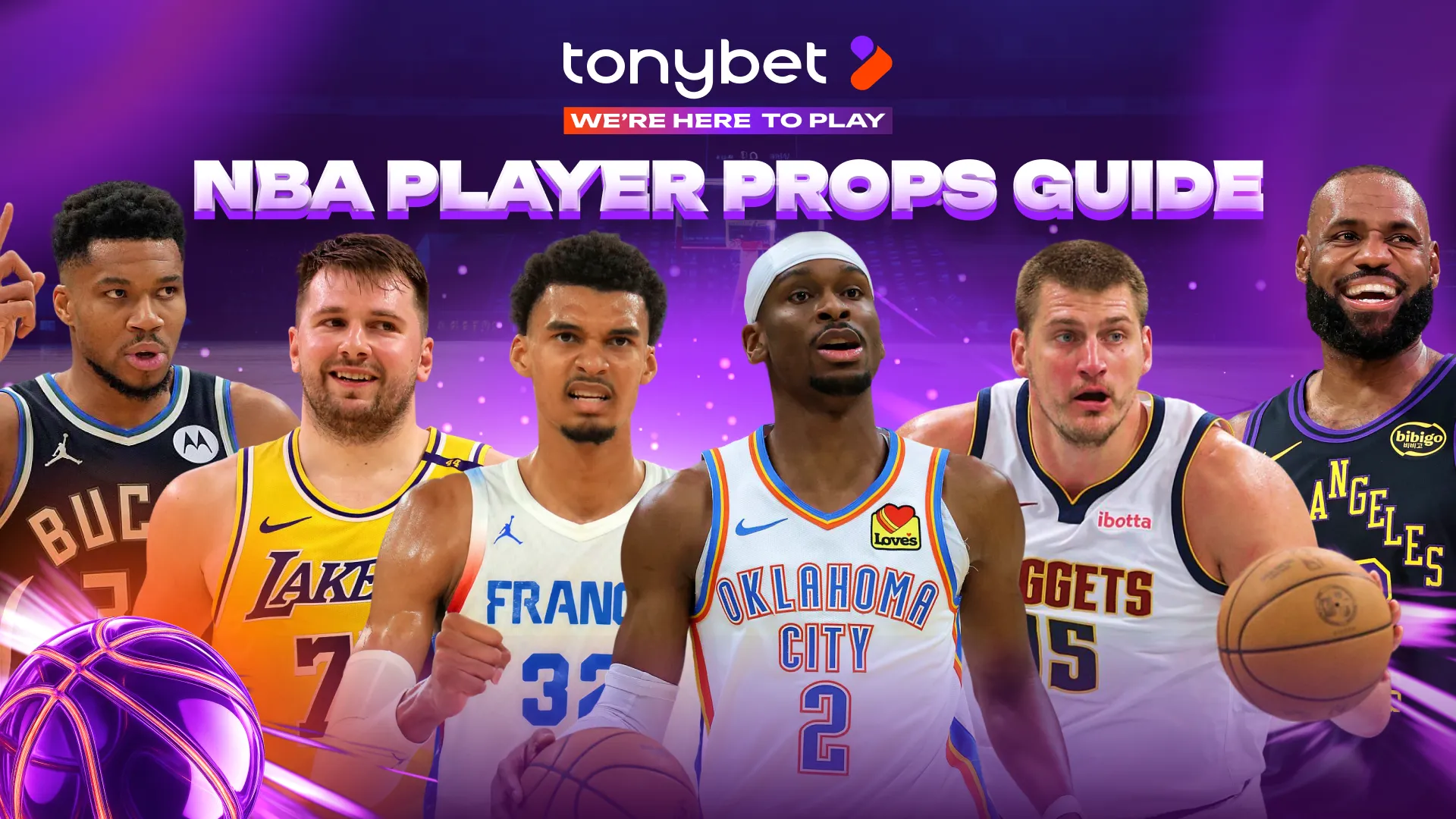



NBA prop bets are simple on the surface: you’re not betting the winner — you’re betting a stat line. The tricky part is the pricing. Sportsbooks are pretty good at hanging numbers that “feel right”, then shading them based on how people usually bet.
This guide is about reading those numbers like a market, not like a highlight reel, so you can spot edges more consistently. It’s the kind of analysis you can reuse on a daily slate.
How Sportsbooks Price NBA Player Props
Most books start with a projection, basically a mean outcome, then build a range around it because real games swing. After that, they adjust based on risk and the action they’re taking. That’s why two books can post the same line (say 24.5 points) but price the sides differently.
A quick, practical way to understand pricing is to translate odds into implied probability. For example, if a prop is priced at -110, the implied probability is about 52.38% before accounting for margin.
Also, don’t confuse a stat market with a money line. In comparison, a prop number is often more sensitive to role changes than sides are.
If you want a cleaner mental model for propositional betting, think of each prop as a mini forecast: minutes, role, pace, matchup, then variance. The algorithm is simple: inputs first, highlights last.
Points Props: Shot Attempts vs Points Per Game
Points per game are descriptive, but they can lag behind what actually drives scoring tonight. The most reliable “engine” for points props is opportunity:
- Shot attempts (especially in the first half of games)
- 3PA volume (because it spikes variance)
- Free-throw attempts (because it stabilises scoring)
- Minutes and role (obvious, but still the biggest lever)
So instead of asking “is he a 25 PPG guy?”, ask “is he likely to get 18–22 shots plus trips to the line in this matchup?”
This is where “narrative pricing” shows up, too. If someone is trending on social media, points props can move even when their underlying shot profile didn’t.
When Points Overs Are Inflated by Public Bias
Overs get more public love, especially on big-name scorers and national TV games. That doesn’t mean “auto-bet unders”; it means you should demand a better reason to play an over.
Good “bias checks” before you click:
- The line jumped, but the opponent’s defensive matchup didn’t change.
- The player’s recent hot streak is driven by unsustainably high shooting.
- The price is worse than you’d expect for a half-point move (books charging extra).
If you still want the over after those checks, fine. At least you’re paying attention to the tax.
Prop Archetypes: Grouping Players by Betting Profile
Instead of reinventing the wheel every slate, it helps to group players by how they produce stats. Think of it as a quick cheat sheet for what to look at first.
| Archetype | What drives the numbers | Props that usually make sense to study |
| Usage-Driven Scorers | Possessions ending in shots/FTs/TOs | Points, 3s, points+assists |
| System Rebounders | Scheme + positioning + rebound chances | Rebounds, double-double, rebounds+points |
| Role Playmakers | On-ball time + teammate shot quality | Assists, assists+points |
| Stat-Stuffers | All-around involvement | PRA combos, alt lines (selectively) |
Usage-Driven Scorers
Usage rate matters because it tells you how often a possession ends with that player’s shot, free throws, or a turnover.
What this means in prop terms:
- If usage spikes because a co-star sits, points props often lag early.
- If usage is stable but efficiency is swinging wildly, you’re in variance territory, not “trend” territory.
System Rebounders
Rebounding comes down to role and scheme as much as effort. Some teams funnel boards to specific positions, and some lineups are built to box out so one guy can clean up.
If you want one hard fact to anchor your expectations, the record for most rebounds in an NBA game is 55, set by Wilt Chamberlain (1960). That number is the extreme ceiling, not a normal range you should expect to see.
What does help in normal betting:
- Track contested vs uncontested board environment. The NBA’s stat glossary defines contested rebounds as boards with an opponent within 3.5 feet.
- Watch lineup context: small-ball opponents can inflate rebounds in basketball for bigs who stay on the floor, but can also reduce total misses if they shoot fewer midrange bricks.
This is where simple analytics help — you’re using real data instead of vibes.
Role Playmakers
Assists props are often a minutes-and-role bet more than a “talent” bet. A simple read:
- Does the player initiate the offence, or just swing the ball?
- Are teammates healthy enough to finish plays?
- Is the opponent scheme forcing the ball out of the star’s hands (which can raise assists even if points drop)?
Role playmakers can be great for unders, too, when their team go iso-heavy late, or when they’re sharing creation with another primary handler.
Stat-Stuffers
These are the guys who can get there in multiple ways, and books know it. That’s why combo lines (like points+rebounds+assists) often have tight pricing.
The way we look at it is basically this:
- Do I trust the minutes in this game script?
- Is it a blowout risk that cuts the fourth-quarter run?
- Is there a matchup that shifts which stat categories come easiest?
Rotation & Injury News: The Biggest Prop Market Edge
If you only focus on one thing, make it this: rotations create the cleanest edges because the market has to re-price minutes and usage fast.
What to look for:
- A starter out, bench guy moves into a 30+ minute role
- A questionable tag that becomes a minute restriction
- A new starting lineup that changes who rebounds (bigs pulled away from the rim) or who handles
This is also the spot where generic stats can mislead you. “Last 10 games” includes matchups and roles that may not exist anymore.
Home vs Away & Rest-Based Prop Trends
Not the fun part, but it’s the one that keeps you out of bad reads. Things that can matter:
- Shooters tend to have more stable routines at home (not a guarantee, just a real-world factor)
- Back-to-backs can reduce minutes, especially for veterans
- Travel can show up as lower pace and worse shooting legs, but it’s team- and schedule-dependent
So treat this as a filter, not a rule. If a prop is already priced for fatigue, you’re not getting extra value just by noticing the schedule.
Live Betting Player Props
Live props are where you can actually react to the role, not guess. It’s also where you can stop copying other people’s predictions and trust what the game is showing you. Look for these in-game tells before you place a bet:
- A player’s shot volume is real (not just two early makes)
- The coach clearly kept the same rotation pattern
- The matchup is playing faster than expected, or the defence is collapsing in ways that create assists
When to Avoid Live Props
Skip live if:
- There’s foul trouble that could flip minutes
- The game is drifting toward a blowout
- You’re reacting to makes instead of attempts
- You’re chasing because you “missed the number”
If you don’t have a clear read, skip it. Forcing picks is how live betting gets expensive.
Best Prop Types for Long-Term Profit
No honest guide can promise a magic market that prints money. But the best long-run approach is usually the boring one: target props where your read is based on stable inputs (minutes, role, shot volume), not just vibes.
A good value spot often looks like:
- Minutes are likely higher than the book’s baseline assumption
- Usage shifts are real (not hypothetical)
- The line is sticky because the public is leaning one way
If you’ve ever wondered about spot value meaning, it’s basically this: you’re not saying “this player is good”, you’re saying “this number is mispriced relative to the most likely role and game environment”.
Responsible Gambling
Betting should be entertainment, not a way to make money. Gambling can be addictive—only bet what you can afford to lose, and never chase your losses. Set deposit, loss, and time limits before you play, and take regular breaks.
If gambling stops being fun or starts affecting your finances, relationships, or wellbeing, seek help immediately.
Support available across Canada:
- Responsible Gambling Council: responsiblegambling.org (national resource centre)
- British Columbia: Call 1-888-795-6111 (24/7)
- Alberta: Call 1-866-332-2322 (24/7)
- Quebec: Call 1-800-461-0140 (24/7, bilingual)
- Saskatchewan: Call 1-800-306-6789 (24/7)
- Manitoba: Call 1-800-463-1554 (24/7)
- Atlantic provinces: Call 1-800-461-1234 (NB), 1-888-429-8167 (NS), 1-855-255-4255 (PE), 1-888-899-4357 (NL)
- Additional support: Gambling Therapy (gamblingtherapy.org), Gamblers Anonymous (gamblersanonymous.org)
- 988 Suicide Crisis Helpline: Call or text 988
TonyBet provides responsible gambling tools in your account settings, including deposit limits, loss limits, time limits, cool-off periods, and self-exclusion. Use them.
Age restrictions: You must be 19 or older to gamble in British Columbia, Saskatchewan, and Atlantic provinces. You must be 18 or older in Alberta, Manitoba, and Quebec. Underage gambling is illegal.
For more information about responsible gambling practices and support resources, visit the Responsible Gambling section on TonyBet.

FAQ
Are player props easier to win than spreads?
Which NBA prop market is most profitable?
Are unders better than overs for props?
How important is the usage rate in prop betting?


