


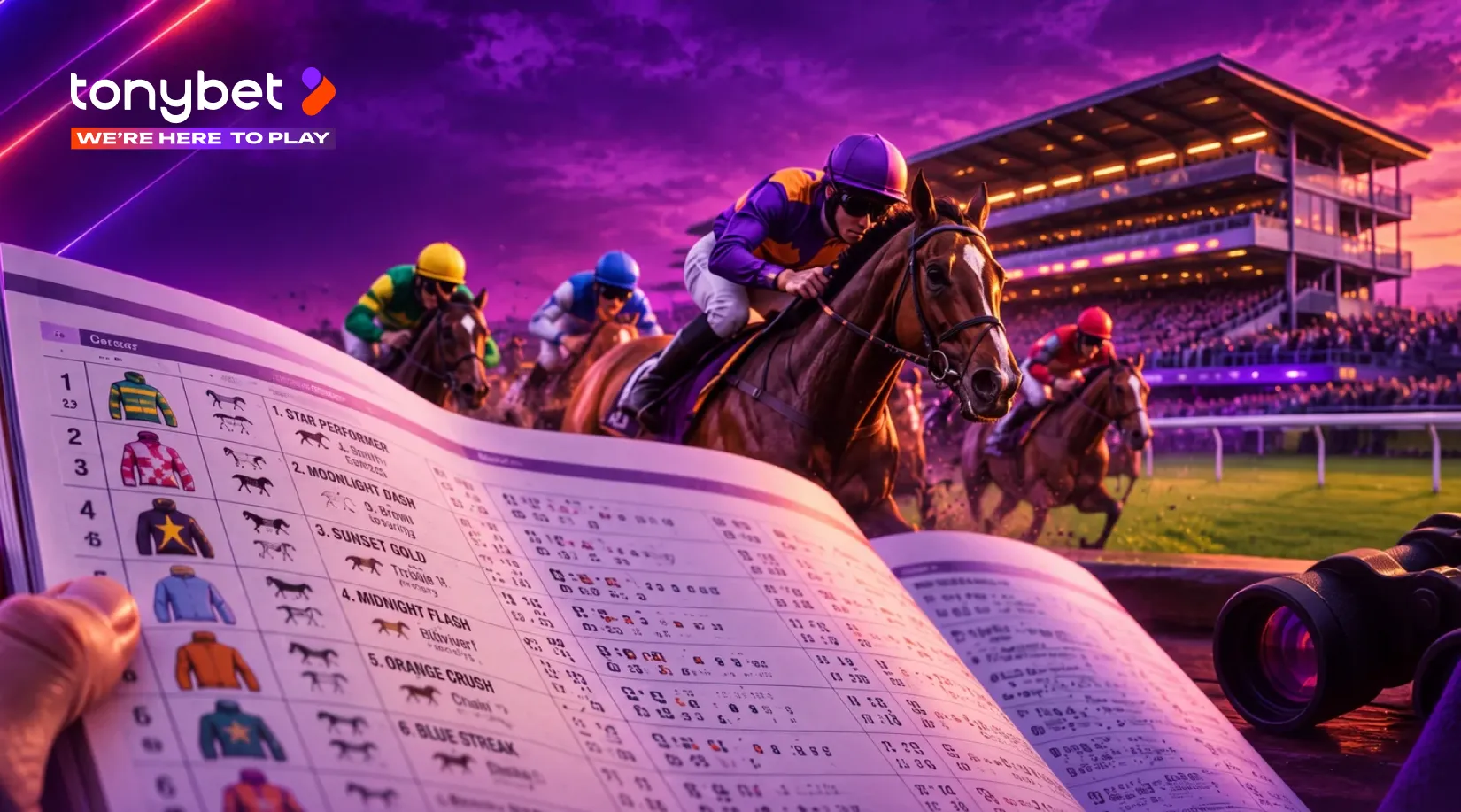


A horse racing racecard is the reference document for any race, listing every runner, its recent form, weight carried, jockey and trainer. For Irish punters, knowing how to read a racecard is the difference between betting blind and making an informed decision. Read on as we explain every key element.
What Is a Racecard and Where to Find One
A racecard is a declaration sheet with all the relevant details, listing every runner confirmed for a race alongside the information you need to assess them.
Racecards appear once runners have been declared, typically 24 to 48 hours before a meeting, and up to five days ahead for major Flat races. Browse horse racing cards today through TonyBet horse racing, which carries form guides, going conditions and jockey and trainer statistics on each race page, plus Racingpost.com and the official racecourse sites. Every runner carries a number, which on the Flat is also its starting stall.
Form Figures — What the Numbers Mean
Form figures are the first thing most punters look at. They run oldest to most recent, so the figure on the right is the latest run. A string reading 2131 means the horse finished second, then first, then third, then first last time out.
The letters and symbols matter as much as the numbers.
| Symbol | Meaning |
| 0 | Finished outside the first nine |
| F | Fell |
| U | Unseated rider |
| P | Pulled up |
| R | Refused |
| B | Brought down by another runner |
| – | A break between seasons |
| / | A break of more than a calendar year |
Context sits behind every figure. A horse showing 0 last time may have met unsuitable ground, run over the wrong distance or returned from a long absence, and none of that shows in a single digit. Current-season form counts for more than older form, especially on the Flat where a three-year-old improves markedly across a few months.
Weight — Why It Matters More Than Most Punters Realise
Every runner carries an allotted weight, shown in stone and pounds on Irish and British racecards. A figure of 9-2 means nine stone two pounds, and some international sources use kilograms instead.
In handicaps, the official handicapper sets those weights from each horse’s rating, so the better the rating, the heavier the burden. Frankel retired with a Timeform rating of 147, the highest ever awarded, and a horse of that calibre would concede large amounts of weight in any handicap.
- Weight for age: Younger horses receive an allowance against older rivals to account for physical maturity. A three-year-old meeting older horses carries less.
- Apprentice and claiming allowances: Less experienced jockeys claim a reduction, usually 7lb, 5lb or 3lb depending on how many winners they have ridden, which lightens the horse’s load.
One point often missed on racecards today: a horse dropping in the weights after a poor run may be racing off a lower mark than before, which changes the conditions it faces even if nothing about the horse has changed.
Going — How the Ground Affects the Race
The going describes the state of the ground and shapes how a race is run. British cards use Firm, Good to Firm, Good, Good to Soft, Soft and Heavy.
Irish horse racing uses its own scale, which trips up punters reading racecards Ireland-wide for the first time. Irish courses describe ground as Yielding, where British ones say Good to Soft, with Good to Yielding and Yielding to Soft filling the gaps. A card from the Curragh and one from Newmarket are not always speaking the same language.
Breeding and training decide which horses handle which surface, and a runner bred for soft ground may struggle on fast. The going record on a racecard shows whether a horse has won on the day’s conditions before. Ground shifts overnight with the weather, so the morning going report is the one that counts, and the Irish climate produces soft and heavy ground frequently enough that going form deserves close attention.
The Draw — Does Starting Position Matter?
Flat runners break from numbered starting stalls, and the draw decides where on the track a horse begins. Jumps races use no stalls, so the draw does not apply.
On certain courses and distances, a low draw on the inside or a high draw on the outside can carry a measurable advantage, most commonly on straight tracks over sprint trips where the rail helps. Draw bias is specific to a course and distance rather than a universal rule, and Racing Post publishes draw statistics for Irish and British Flat racing.
Reading a card well gives you more information, not a guaranteed result. Form, weight, going and draw are pieces of context, and no combination of them removes the risk from a bet.
Responsible Gambling
Gambling should always be a form of entertainment, never a way to make money or solve financial problems. Set a budget before you bet and stick to it. If gambling is becoming a problem, free and confidential support is available at gamblingtherapy.org.
18+ | Play Responsibly | gamblingtherapy.org | T&Cs Apply


