



If you’ve only been playing casino games for a short while, or if you are new to the lingo used, you may not be familiar with something called the house edge, which applies to all games offered by casinos online and offline. In short, the house edge ensures that casinos can make a profit while still offering players legitimate prizes.
The house edge has been the subject of many strategy guides in the past, but ultimately, you will always be subject to it regardless of the games you play. The house edge doesn’t render games unfair or even unlikely to pay out, but it does mean that casinos can continue offering games while making revenue.
In this guide, we’ll dive into what the house edge actually means in practice, how it’s calculated (and what’s considered a ‘good’ house edge from game to game), and whether or not a low edge means that your odds improve.
Play classic tables and slot games at Tonybet.
What is house edge, and why does it matter?
The house edge of a casino game is a built-in advantage which ensures that casinos will make a profit. Without it, casinos would effectively be giving away money, with bets all going towards jackpot prizes and the like. It is a mathematical advantage, specifically, that actually determines the odds in games – from tables to live casino games to slots.
Essentially, the house edge tilts casino games in the favour of the owner, if only slightly. However, this shouldn’t ever be considered ‘rigging’ games! Reputable and regulated casinos such as Tonybet carefully choose and launch games with a pre-determined house edge along with clear odds on all markets and potential outcomes listed. This means that players are never in the dark on their odds, and the house edge is already accounted for.
A simple way of looking at the house edge is to consider a basic, practical example. Let’s say that you head to a table with an average house edge of around 2%. This means that, over the long run, players may lose around €2 from €100 in wagers. This isn’t set in stone – it’s an average, meaning that you won’t always lose exactly €2 for every €100. Due to game variance and other internal factors, you may lose more or less (that’s the key to truly random gaming!).
The more money is wagered over time, the more likely losses will line up with the house edge. Therefore, some players look for games that offer a low house edge because they believe that their chances are better (we’ll explore this psychology below).
Ultimately, the house edge matters because it tells you what a casino can expect to take from winnings on average, and what it expects to make in profit in the long run. However, it’s based on an indeterminate, average amount of time, meaning that it is a transparent guide to show you what to expect from games and their fairness. Therefore, looking at and understanding the house edge of games can also help you to budget and play responsibly, effectively choosing games where you can reduce risk (depending on your personal risk level).
How is house edge calculated?
The positive news is that, online, the house edge is typically built into slots, tables and live dealer games, and you normally won’t have to worry about calculating it yourself. That said, in the interest of complete transparency, it’s always worth understanding how the figure is worked out so that you know where you stand.
Essentially, the house edge sets payout structures slightly below what players might expect from true odds so that casinos can make a profit (rather like a commission). It’s calculated by considering every outcome’s true probability alongside the payouts offered, and then accounting for a casino’s profit over an average amount of time.
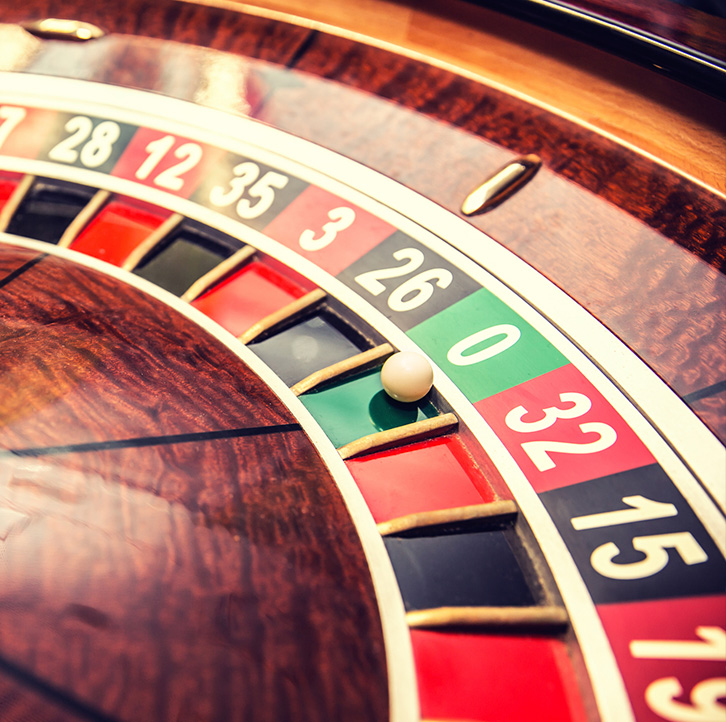
Let’s use European roulette as an example, which offers a one in 37 chance of a single number converting, with a payout of 35/1 for single-number bets. Let’s assume that you place €1 on each number on the board, bringing your total to €37.
- This means that you are now guaranteed to claim €35 plus your €1 stake back, and you lose €1. This, essentially, is the casino’s profit.
- Divide the loss by your expenditure, so €1 by 37, and you get 0.0270.
- As a percentage, that’s 70%, the official house edge for European roulette!
You can use this formula to calculate the house edge in any casino game, but in many cases, this will be listed for you before you play.
What is a good house edge percentage?
Crucially, the lower the house edge, the ‘better’ it is for players, as it mathematically means that casinos will remove less profit from prizes over time. Many table games, such as blackjack and baccarat, offer house edges that fall below 2%, which is considered very competitive. But remember, a low house edge does not guarantee returns, and it also doesn’t guarantee how much players can expect to claim back in prizes.
The games with the highest house edge tend to be online slots, which vary depending on their RTP (more on this below). A ‘good’ house edge percentage is one that you feel comfortable with based on your attitude to risk – and again, house edges are hypothetical calculations that pay off over time, based on averages, meaning that actual returns and losses will always fluctuate.
House edge vs RTP: what’s the difference?
The house edge and the RTP, or Return to Player, look at casino game probabilities from two different angles:
- The house edge, as established, examines the profit that a casino may expect to make from a specific game over time based on averages.
- The RTP, meanwhile, theoretically breaks down the potential returns a player can expect over a game’s lifetime.
Like the house edge, the RTP of a game is demonstrated as a percentage – for example, 96% (which is usually the benchmark of a fair slot game). This doesn’t mean that a player is guaranteed to convert on bets 96% of the time! It means that, across a game’s lifespan, and accounting for millions of potential players, it is programmed to pay out €96 for every €100 bet.
Given that some slot games stay listed for years at a time, it’s based on a huge mathematical equation, meaning that you should never rely on it completely for deciding which games are better to play.
The RTP and the house edge work in tandem, with the former advising players of a game’s potential payout over time, and the latter explaining the profit potential. Take the example of European roulette again. Since the house edge is 2.7%, the RTP is 97.3%. Neither should be used to accurately measure outcome potential, though, and you should always play games responsibly, regardless of the facts and figures in play!
Does a lower house edge mean that you will win more?
Casino games with lower house edges than others may offer higher prize potential, given that mathematically, casinos expect to profit less from them over time. That said, the size of the house edge doesn’t guarantee prize conversions or losses, as outcomes are still always going to be random. It’s simply an average calculation that casinos rely upon to make sure that they can profit.
As a numbers game, many casino bettors see the house edge as an advantage if it is lower than, say, 2%. Certainly, players may pick lower-edge games than higher-edge ones because the risks are effectively lower. However, this isn’t to say that high-edge games don’t convert.
Ultimately, there are lots of different figures and calculations to consider when it comes to working out whether or not casino games are worth playing. We always recommend that you:
- Check a game’s house edge and RTP.
- Consider minimum and maximum bet levels.
- Set clear, safe limits on play, such as time and money spent.
Above all, it’s vital that you keep an open mind when it comes to playing any games online and offline. If you need help managing your gambling or account at any time, be sure to contact the Tonybet team!


